What is Clubfoot? Congenital Deformity | Best of World Clubfoot Day 2025
Know about clubfoot
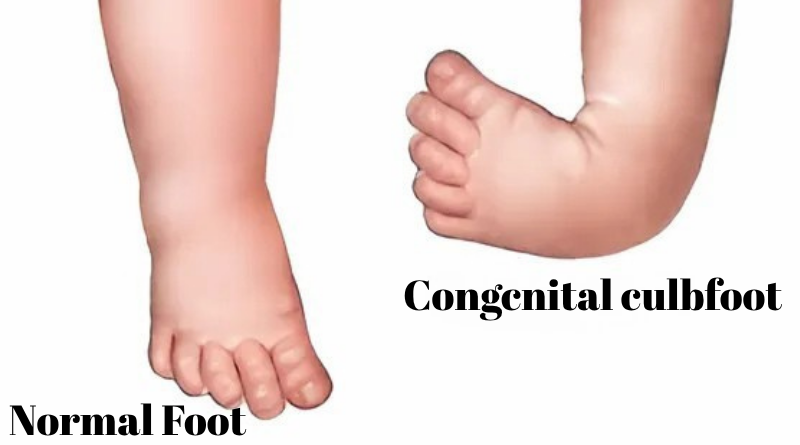
Clubfoot is not merely a twisted ankle; it’s a complex deformity involving not just the bones but also the surrounding soft tissues – the ligaments, tendons, and muscles. In a typical clubfoot, these soft tissues on the inside and back of the foot are tighter and shorter than they should be, pulling the foot into its characteristic position. Conversely, the tissues on the outside and front of the foot may be stretched and weakened. The bones themselves are also abnormally shaped and positioned, contributing to the rigidity of the deformity. Over time, if uncorrected, these structural differences become more pronounced and fixed.
Types of clubfoot
It’s important to distinguish between different types. The most common form, accounting for the vast majority of cases, is idiopathic clubfoot. The term “idiopathic” means that the cause is unknown, and the it occurs in an otherwise healthy child with no other associated medical conditions. This type is generally very responsive to non-surgical treatment.
Less commonly, clubfoot can be syndromic, meaning it’s associated with other underlying medical conditions or genetic syndromes. Examples include spina bifida, arthrogryposis, or chromosomal abnormalities. In these cases, the clubfoot may be more rigid and challenging to correct, as it’s part of a broader health picture. The treatment approach might need to be adapted to address the child’s overall health needs.
Finally, there is positional clubfoot, which is often confused with true clubfoot. In it, the foot is simply held in an awkward position within the womb due to limited space, but the underlying bone and soft tissue structures are normal. This type of foot is flexible and can be passively corrected to a normal position with gentle manipulation. Positional clubfoot usually resolves on its own or with simple stretching exercises and does not require the intensive treatment necessary for true clubfoot.
Characteristic
A key characteristic is its rigidity. Unlike a foot that is simply held in an awkward position (positional clubfoot), a true clubfoot cannot be easily manipulated into a normal, plantigrade (flat on the ground) position. This rigidity is due to the tightness of the soft tissues and the abnormal alignment of the bones. Despite its appearance, clubfoot does not cause pain or discomfort to the infant. However, if left untreated, it can lead to significant functional limitations, pain, and difficulty walking as the child grows. The affected foot typically remains smaller than the unaffected foot, and the calf muscles on the affected side may also be less developed.
Understanding the condition is – a structural deformity involving bones and soft tissues – is the first step towards recognizing its treatability and setting the stage for effective management. With modern treatment approaches, the vast majority of children born with it can achieve a normal, functional, and pain-free foot, enabling them to lead active and fulfilling lives.
Film on Awareness: Main Bhi Arjun: Parv
Upcoming Motivational Movie on the condition